When you discover a suspicious stain, bite mark, or black spot on your mattress, your first reaction is often concern. But how do you know when it’s really necessary to contact a bed bug specialist?
The good news is that in many cases, a simple inspection is enough to put your mind at ease. However, some situations require professional intervention.
Here is a clear and reassuring guide to knowing when to ask for help, what an expert does, and how an intervention works.
An isolated spot, a single pimple, or occasional itching do not usually warrant intervention.
In most cases, it is recommended to:
Seeking professional help is only necessary when several signs coincide.
You should contact a professional if you notice:
A single sign may be a coincidence.
Several signs together → high probability of bed bugs.
If you notice:
then it’s time to call an expert.
Bed bugs feed every 2 to 7 days: a continuous appearance is a reliable indicator.
This is the clearest and most serious sign.
In this case: professional inspection is recommended.
In apartments, bedbugs can:
If you live in a shared building → rapid and coordinated action is strongly recommended.
Some DIY methods (commercial sprays, light steam, consumer insecticides) are not enough.
If after cleaning:
then professional treatment becomes essential.
A bed bug specialist does not just “treat.”
They start by diagnosing the problem to avoid mistakes and target the areas that are actually infested.
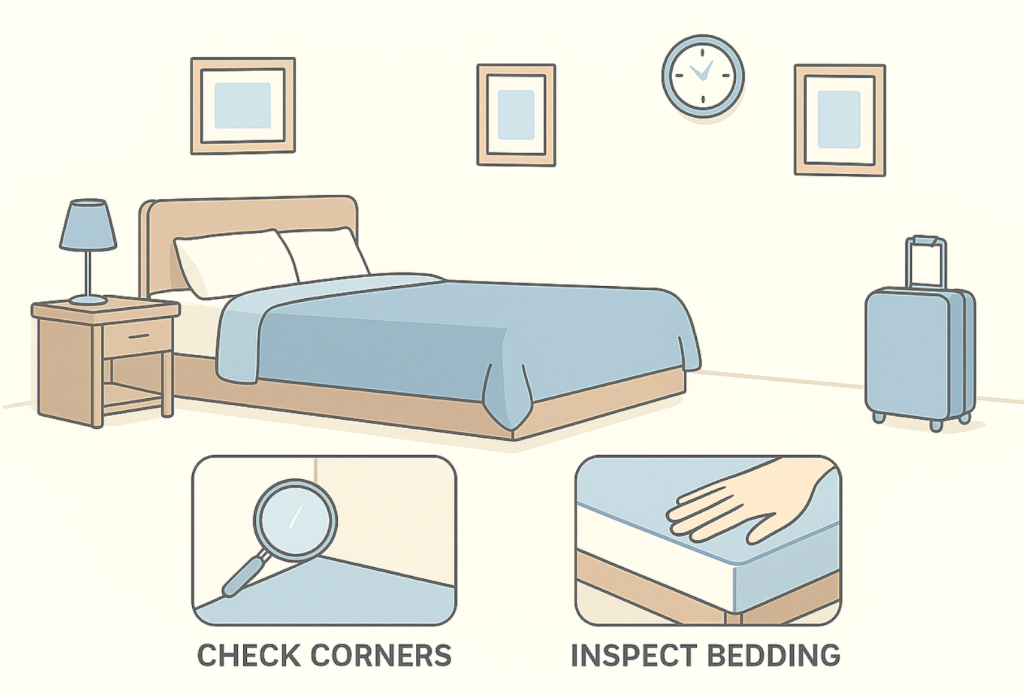
The bed bug professional inspects:
Using tools such as UV lamps, inspection tools, or chemical detectors, they can confirm the presence of bed bugs in your home.
There is no need to call an expert when:
you find a single stain or isolated spot,
the bites look like mosquito bites after an evening outdoors,
there are no visible traces in the bed despite your inspections,
you are simply worried after reading an article.
In these cases:
→ observe
→ inspect calmly
→ follow a step-by-step guide
| Situation | Yes | No |
|---|---|---|
| Several signs match (droppings + bites + stains) | ✔️ | |
| Regular, aligned bites appearing each morning | ✔️ | |
| A live bed bug has been found | ✔️ | |
| You live in shared housing (apartment building, residence) | ✔️ | |
| Recent travel + appearance of suspicious signs | ✔️ | |
| Home treatments have been ineffective | ✔️ | |
| A single isolated sign (one stain or single black dot) | ✔️ | |
| No recurring bites | ✔️ | |
| No visible traces in the bed | ✔️ | |
| Simple concern without concrete evidence | ✔️ |
Calling in a professional is not always necessary, but becomes essential when there are several signs, persistent doubt, or direct evidence. Experts can quickly confirm or rule out the presence of bedbugs and prevent the situation from worsening.
Yes. In apartment buildings and collective housing, bed bugs can move from one apartment to another. They can travel through:
baseboards, cracks in walls,
technical ducts (heating, ventilation, cables),
or even the spaces around pipes.
Even though they don’t travel very fast, they are capable of moving several meters in search of a new place to feed and hide.
That’s why, when several signs are present—regular bites, black marks, suspicious stains, or visible bugs—it’s essential to act quickly. Early detection prevents the infestation from spreading to other homes and also makes treatment easier.
In apartment buildings, it is often recommended to notify the property manager, owner, or management company in order to coordinate inspection and treatment in all affected homes.
Yes, but they prefer fixed locations such as mattresses or box springs. They rarely stay in clothing, unless it is left near the bed or scattered on the floor.
No. They are not attracted to dirt or odors: they are only looking for human blood and narrow hiding places. They infest clean homes just as easily.
In most cases, no. Professional treatment is sufficient. Throwing away the mattress can even spread the infestation if the bugs remain in the box spring or mattress.
© All Rights Reserved. © Tous droits réservés. © Todos los derechos reservados. © Alle Rechte vorbehalten.