
Bed bugs can infest any home, even clean and well-maintained ones. Their discreet nature and ability to hide make them difficult to detect—but regular, methodical inspection is often enough to spot the first signs, prevent an infestation, and take action before the situation becomes more complex or costly.
This comprehensive guide explains how to check your bedroom effectively, where to look, what signs to identify, and how to establish a simple 30-second routine to drastically reduce the risk of infestation.
Regularly checking your bedroom is one of the simplest and most effective ways to prevent bedbug infestations. A visual inspection requires no expertise or complex equipment, but it allows you to take action early, before the pests multiply.
Here are the main benefits:
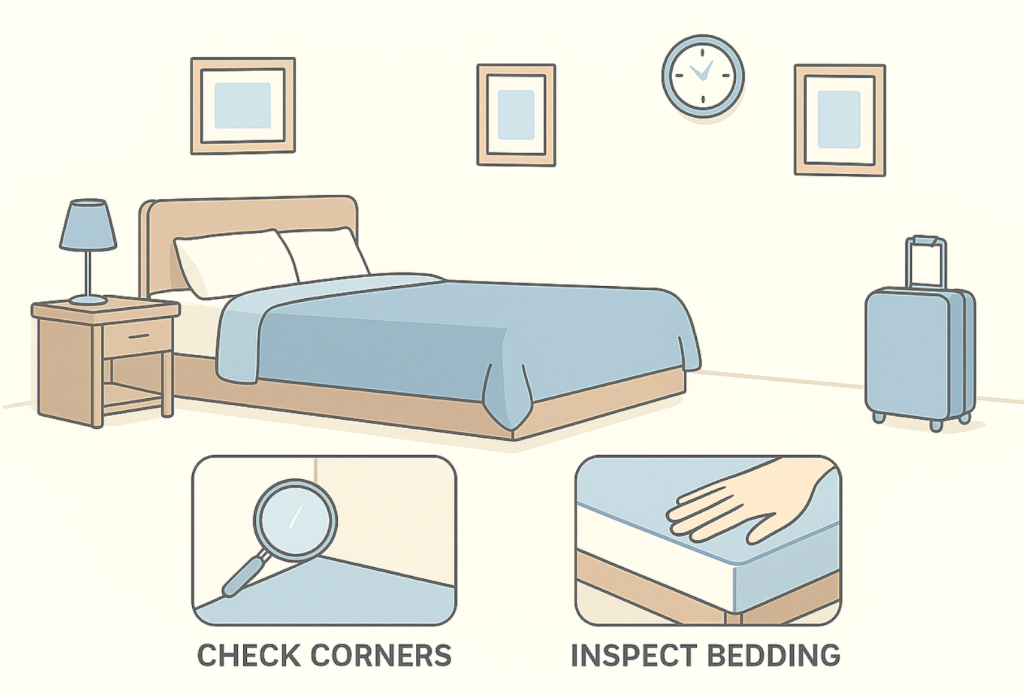
Bed bugs hide in tight, dark, and still places, often close to their food source: the bed.
Here are the key areas to inspect:
Every 1 to 3 months, or systematically after a trip or a second-hand purchase.
Even if there are no visible signs, certain times of year are particularly conducive to the appearance or introduction of bed bugs.
Here are the main reasons to inspect your bedroom:
Bed bugs leave several types of clues. Here are the most reliable ones:
Rare during a quick inspection, but it is possible to detect them along seams, frames, or baseboards.
Here are the best habits to adopt on a daily basis:
These simple steps greatly reduce the risk of infestation.
Today, artificial intelligence can quickly analyze a suspicious stain or potential sign of bed bugs. All you usually need to do is take a clear photo of the affected area to get an initial automatic assessment based on thousands of comparative images.
The most important rule: stay calm.
A single stain does not mean infestation.
For a simple protocol to follow, see our comprehensive guide:
→ “What to do if in doubt?”
You will learn:
how to analyze a stain,
how to check areas at risk,
when to call in a professional.
Taking action against bed bugs
No, it is absolutely not necessary to dismantle the entire bed to check for bed bugs. A simple, targeted visual inspection is sufficient in the vast majority of cases. Bed bugs hide in very specific areas: mattress seams, corners of the box spring, behind the headboard, or nearby furniture. By focusing your observation on these key areas, you can spot the first signs quickly, effortlessly, and without having to disassemble your bedding. This approach is not only more practical, but also perfectly suited for a regular routine, both at home and when traveling.
No. They feed on blood, not garbage. They infest clean places as much as messy ones.
Every 1 to 3 months, or systematically after a trip or a second-hand purchase.
Yes, adult bed bugs are clearly visible to the naked eye. They are generally between 4 and 7 mm long, about the size of an apple seed. Their oval shape and reddish-brown color make them relatively easy to identify when they are moving or when they are detected in an exposed area.
However, their eggs and younger stages (called nymphs) are more difficult to spot. The eggs are tiny, whitish, and slightly translucent, often hidden in very fine seams. Nymphs are smaller and lighter in color, making them less visible on light-colored surfaces.
Despite this, regular visual inspection can often reveal associated signs—feces, stains, molted skins—even if the insects themselves are not immediately visible.
© All Rights Reserved. © Tous droits réservés. © Todos los derechos reservados. © Alle Rechte vorbehalten.