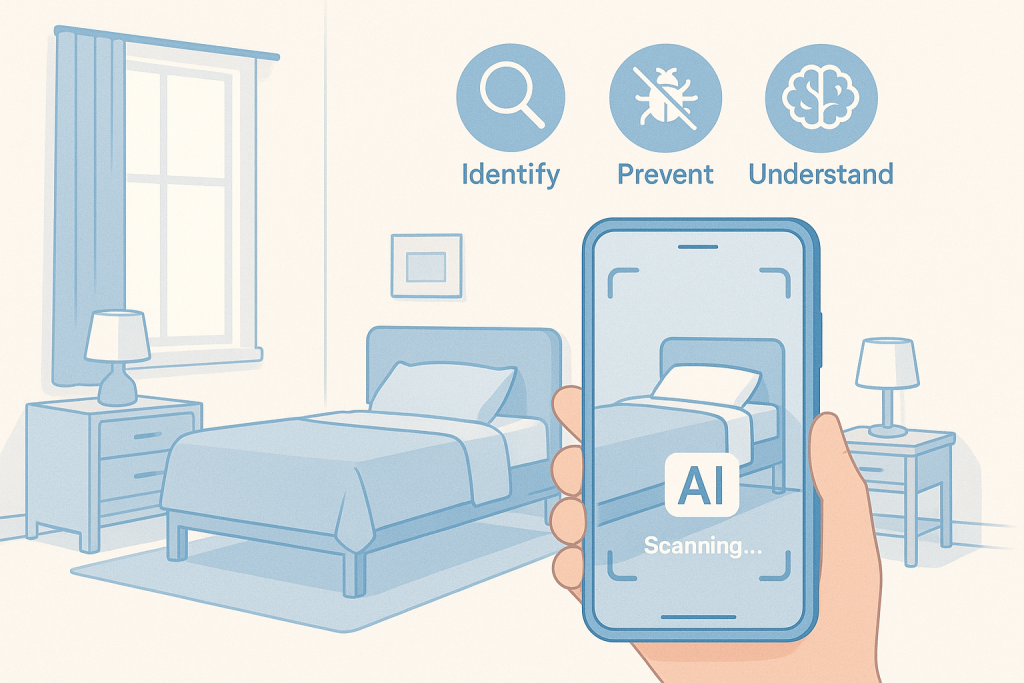
Waking up with red, itchy bumps? Just got back from a trip and worried you might have been bitten during the night? Bed bugs are now very common in homes, hotels, hostels, and Airbnbs. Their bites can be confusing because they often look like those of other insects.
The good news is that by looking for a few simple signs, you can identify—or rule out—a bed bug bite without panicking.
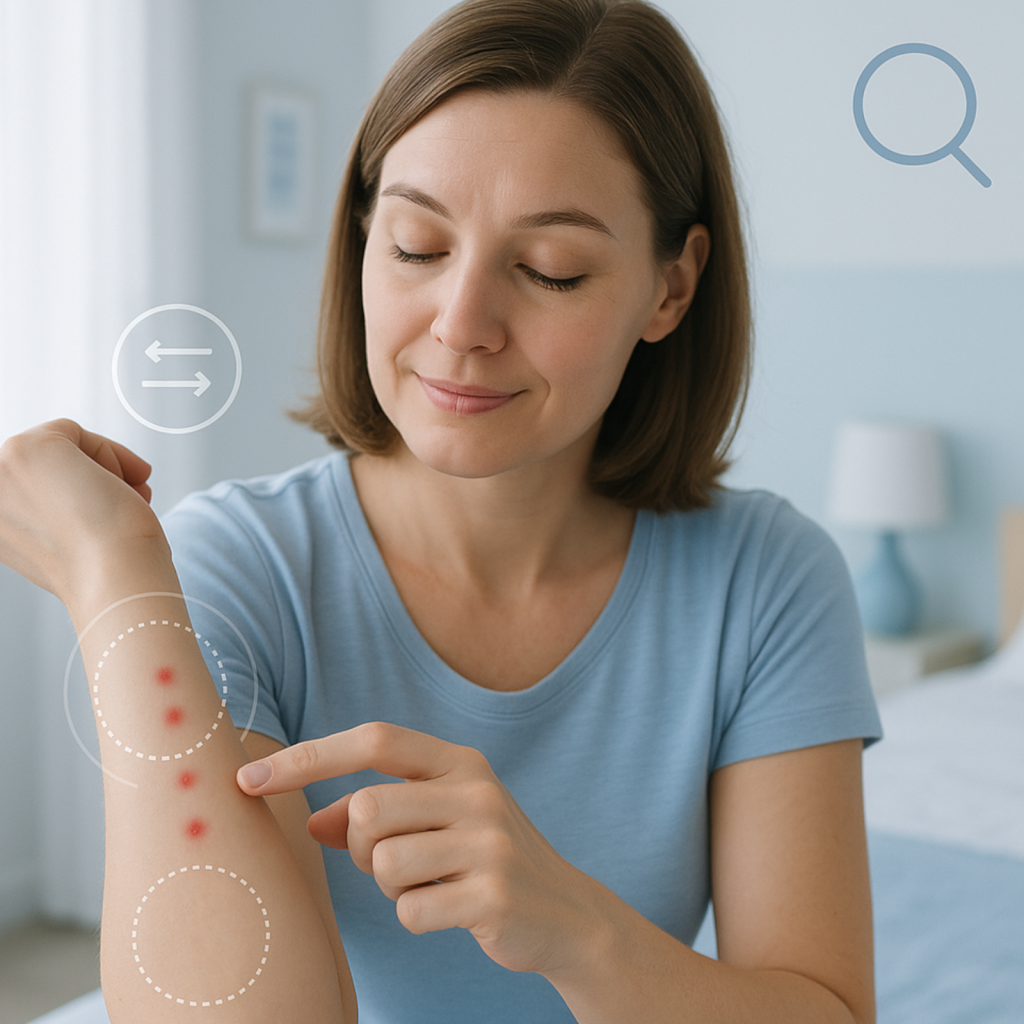
Bed bugs feed at night while you sleep. Their bites are painless at the time, and skin reactions appear several hours later.
Here are their typical characteristics:
Main characteristics
| Criteria | Bed Bug Bite | Mosquito Bite | Flea Bite |
|---|---|---|---|
| Pattern | Aligned or clustered | Isolated | Grouped, often around ankles |
| Itching | Strong, often delayed | Immediate | Immediate and intense |
| Timing | At night | Day and/or night | Day and/or night |
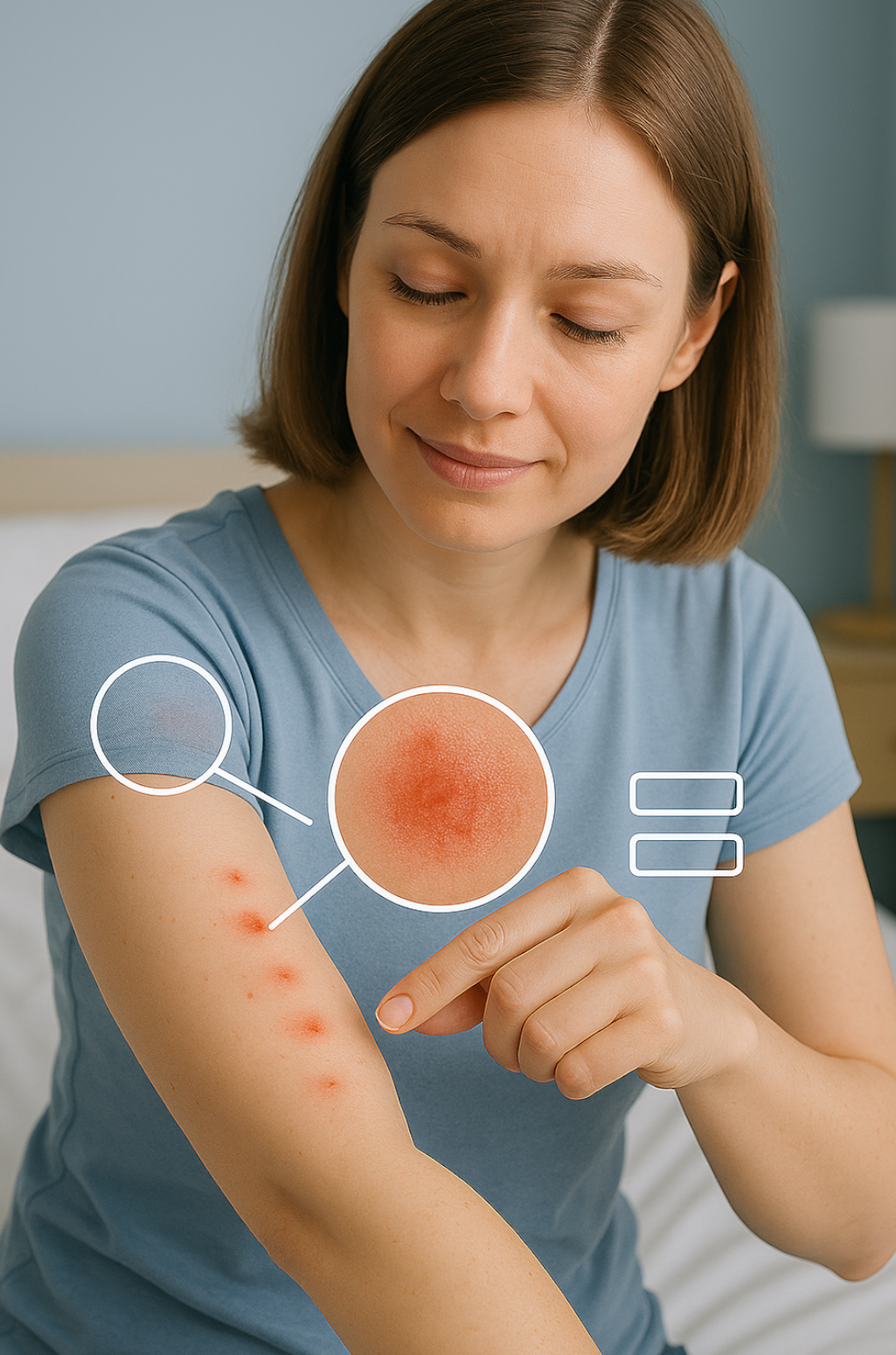
| Appearance | Red, sometimes swollen | Round, raised bump | Red with a halo, dark central point |
Bed bugs vs. mosquitoes
Bed bugs:
Mosquitoes:
Bed bugs vs. allergies or eczema
Bed bugs:
Allergies or eczema:
Helpful tip:
Take a photo of the bites to compare their progress or to show to a healthcare professional.
Duration: Bites may remain visible for 1 to 2 weeks.
Note: Some people do not react at all, which makes detection difficult.
A single bite is never enough to diagnose an infestation.
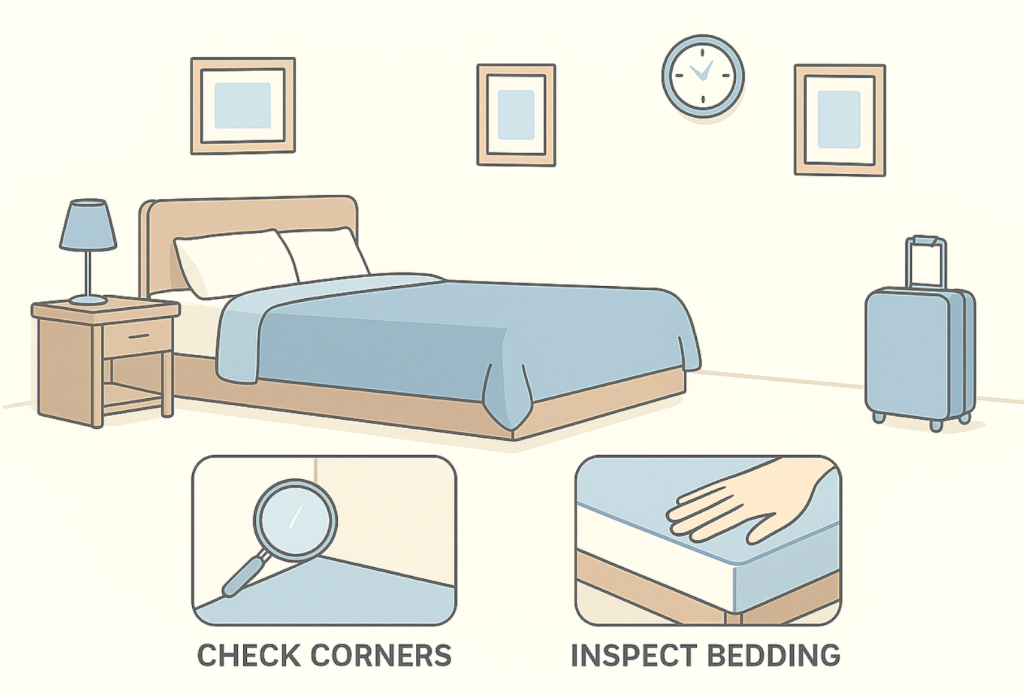
Here are the key signs to look for in your bedroom:
Not everyone who is bitten by bed bugs reacts in the same way. Available studies show considerable individual variability, influenced by skin sensitivity, the immune system, and the frequency of bites.
Reactions to bedbug bites are very common, but not systematic.
>>> 70 to 90% of people have a visible reaction.
This can take the form of:
This is the most common and easiest to identify response.
>>> 10 to 30% show almost no reaction (asymptomatic)
These people may:
The absence of a skin reaction can delay detection of the infestation, sometimes for several weeks.
Bedbug bites do not always appear immediately. The delay can be between 4 and 48 hours after the bite.
For sensitive skin and allergic reactions, the appearance of bites can sometimes be delayed up to 3 days. This delay explains why some people think they have been bitten “elsewhere,” when in fact the bedbugs were already present in their home or hotel room.
The duration depends greatly on individual sensitivity.
In the event of a local allergic reaction, the marks may persist for up to 3 weeks, sometimes longer if the skin is fragile or if the person has scratched a lot. The bites therefore take longer to disappear than mosquito bites, which is an additional identifying feature.
Bed bugs often cause concern due to their bites, nocturnal movements, and persistent reputation. However, recent scientific data helps clarify what constitutes a real risk, what is possible but unproven, and what is completely false.
Here is a comprehensive chapter, based on sources from the CDC, ANSES, scientific studies, and international journals, to understand what science really says.
To date, the world’s leading health agencies are unanimous:
bed bugs do not transmit any known infectious diseases to humans.
Official sources
CDC (Centers for Disease Control and Prevention – USA):
Ministry of Health (France):
International scientific journal (Journal of Infectious Diseases, 2016):
Bed bugs are unpleasant, but not dangerous in the infectious sense of the term (unlike mosquitoes or ticks).
Even though they do not transmit diseases, bites can cause:
Skin reactions
Allergic reactions (more rare): Some people may develop
Secondary infections: Not caused by the bug, but by scratching
Tip: Clean the area, apply a soothing agent, and avoid scratching.
Studies show that bed bugs affect both mental health and skin:
Australian and American research shows that many people develop post-event stress, comparable to a temporary phobia.
Associated psychological problems:
Some studies have found viruses, bacteria, and parasites in the bodies of bed bugs—but be careful:
Examples observed in the laboratory:
No actual human cases of transmission by bed bugs have ever been documented.
Why? Because in order to transmit a disease, the insect must:
However, none of these steps have been confirmed for bed bugs. Research is ongoing, but the consensus remains clear:
infectious danger = very low to non-existent.
Treatments are simple and mainly aim to calm the inflammation:
Ineffective or dangerous remedies
Relieve itching:
Confirming the presence of bedbugs:
See our guide: How to inspect your room?
Take action against infestation
The most important rule: stay calm.
A single stain does not mean infestation.
For a simple protocol to follow, see our comprehensive guide:
→ “What to do if in doubt?”
You will learn:
No. Bed bugs do not transmit any diseases, but their bites can cause irritation or infection if scratched excessively.
Treatment is simple and mainly aims to relieve discomfort:
The bites usually disappear within a few days.
Yes, bed bugs are visible to the naked eye, but their small size and tendency to hide can make them difficult to spot.
What do they look like?
© All Rights Reserved. © Tous droits réservés. © Todos los derechos reservados. © Alle Rechte vorbehalten.