
Bed bug droppings are one of the most reliable indicators of their presence, but they must be interpreted calmly and without rushing to conclusions. A single black spot is not enough to conclude that there is an infestation. By taking the time to observe a few key elements—the shape of the deposit, its very dark color, its location often clustered near bedbug resting areas, and its reaction to rubbing (a mark that spreads slightly like ink)—you will be able to distinguish between a true sign of activity and a common everyday stain.
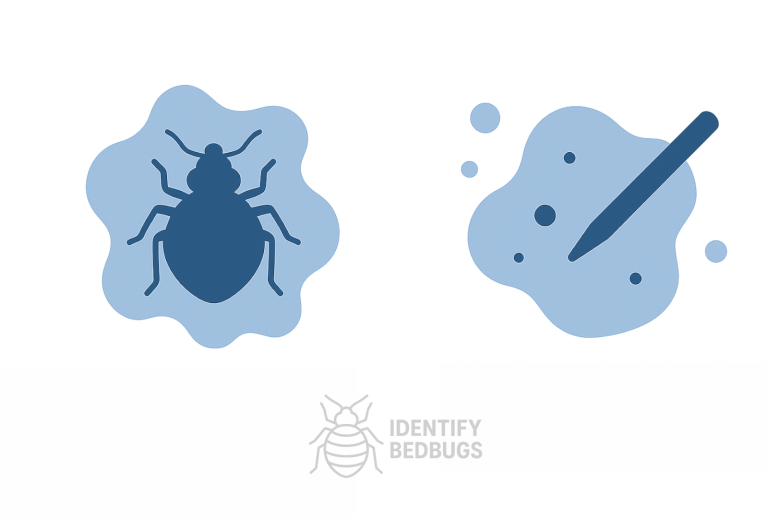
Bed bug droppings appear as tiny black or very dark brown deposits, directly related to their digestion. After feeding on blood, bed bugs excrete a residue that is highly concentrated in iron, which explains its dark color and almost “graphite” appearance. When deposited on fabric, seams, or porous surfaces, these small marks often resemble dried ink, slightly embedded in the fiber. They behave like an absorbed stain: a dense, clear, dark spot that can spread slightly if rubbed with a damp cloth. This “printer ink” appearance is one of the most characteristic and easily recognizable features.
Bed bug droppings are one of the most reliable indicators of their presence, but they must be interpreted calmly and without rushing to conclusions. A simple black spot is not enough to conclude that there is an infestation. By taking the time to observe a few key elements, you will be able to distinguish between a genuine sign of activity and an ordinary everyday stain.
The rub test is one of the simplest and most effective ways to confirm the nature of a suspicious stain.
Genuine bed bug excrement:
This reaction is related to the composition of these deposits, which contain digested blood. If the stain does not spread and remains solid or powdery, it is probably another type of residue (dust, mold, textile mark, etc.).
Today, artificial intelligence can quickly analyze a suspicious stain or potential sign of bed bugs. All you usually need to do is take a clear photo of the affected area to get an initial automatic assessment, allowing you to confirm or rule out your suspicions.
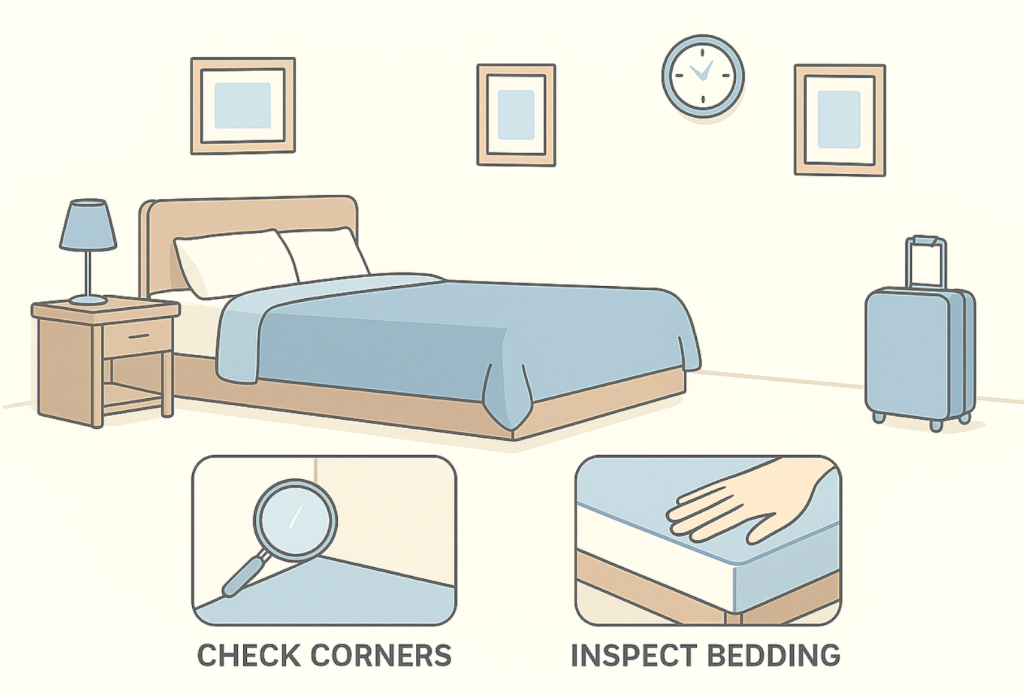
Bed bugs live and move around in very localized areas: seams, folds, cracks, or corners of the bed.
This is why their droppings almost always appear in clusters, in the form of:
A group of closely spaced spots is much more significant than a single dot. If you see several closely spaced marks in the same place, this strongly indicates the likelihood of actual activity.
Bed bug droppings have a very distinctive appearance. They are usually:
This regularity distinguishes them from irregular, blurred, or colored spots, which are rarely associated with bed bugs.
However, a single spot is not enough to conclude that there is an infestation. It could be dust, textile residue, or an old mark unrelated to pests.
Bed bugs hide in narrow, quiet, dark areas. Their droppings therefore appear in specific places—often clustered together.
Some everyday stains can easily be mistaken for signs of bed bugs, especially when they are dark or located near bedding. To avoid false alarms, it is important to know how to recognize the differences between real bed bug droppings and simple, insignificant stains. By carefully observing the color, texture, shape, and especially the reaction to rubbing, you can distinguish between harmless marks and those that require special attention. Here are the most common confusions and the key elements to differentiate them with confidence.
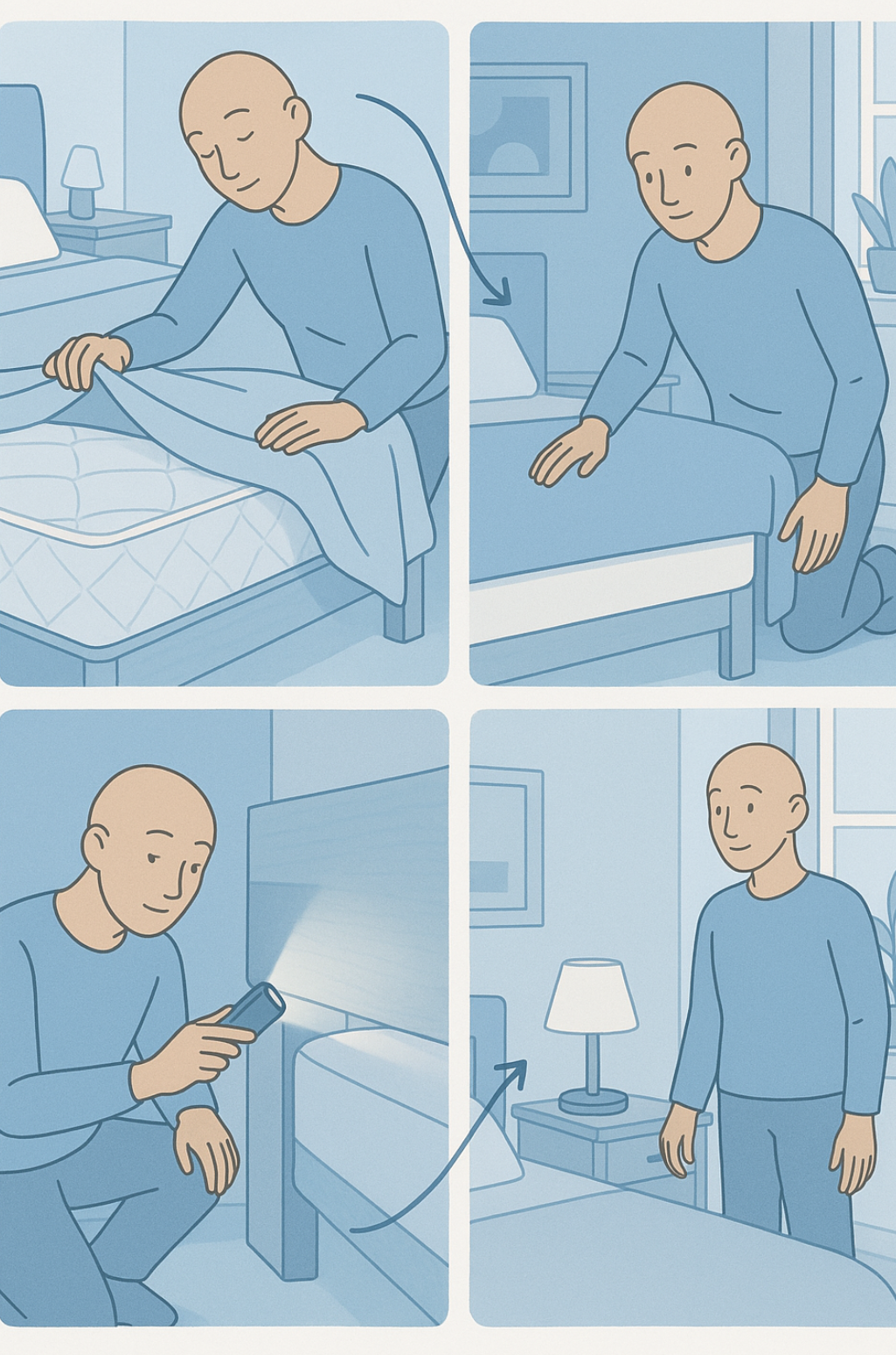
When you spot a dark stain that seems unusual, it is important to remain calm and methodical. The first step is not to jump to conclusions. Many everyday stains look like bedbug droppings without actually being so.
To help you, you can consult our detailed guide “What to do when in doubt?”, which explains each step with photos and practical advice.
No, bed bugs do not transmit diseases. However, their feces can release a small amount of histamine, which can cause irritation in some sensitive individuals.
Bed bug droppings look like several small black dots very close together, often lined up along a seam or corner.
Yes, hence the importance of testing for friction, location, and quantity.
© All Rights Reserved. © Tous droits réservés. © Todos los derechos reservados. © Alle Rechte vorbehalten.