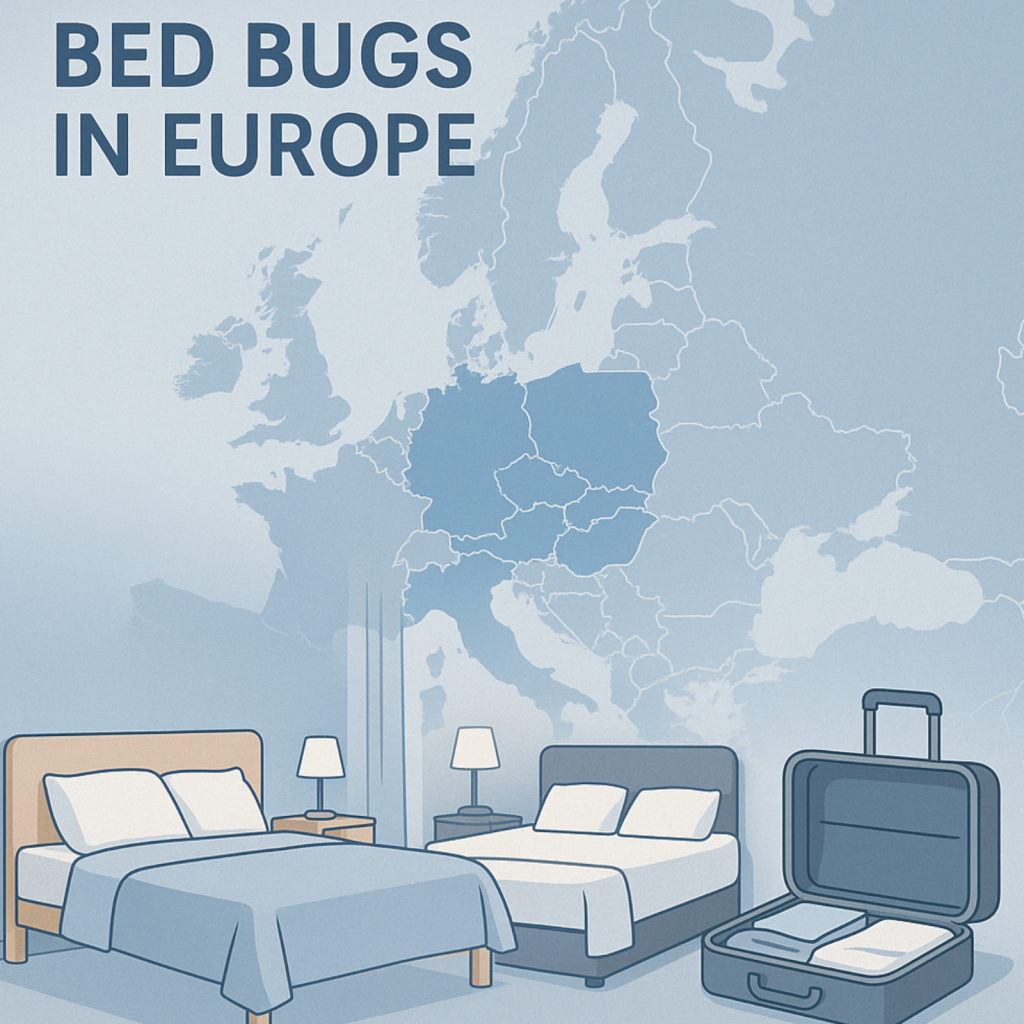
Bed bugs are no longer a marginal phenomenon. The available data (although sometimes fragmentary) show a continuous global increase, mainly affecting private individuals, well beyond hotels and tourist accommodation.
This chapter offers a clear and honest interpretation of the available figures, their limitations, and the major trends observed.
Health authorities and pest control professionals agree on one thing: bed bug infestations have been steadily increasing since the early 2000s.
This increase has been observed:
Data from health agencies, national surveys, and pest control professionals converge on the following points:
According to cross-referenced data from pest control unions and public agencies:
These figures only reflect reported cases; many infestations are never reported.
Why are figures difficult to establish?
It is very difficult to obtain accurate and completely reliable figures on bed bug infestations in private homes worldwide. Unlike certain regulated diseases or pests, there is no centralized database or international reporting requirement. The majority of cases are therefore never officially recorded.
Several factors explain this statistical invisibility. Bed bugs are often confused with other biting insects, such as mosquitoes or fleas, which delays or prevents their identification. Many households also choose not to report an infestation for fear of stigmatization or judgment, especially in apartment buildings. Added to this is the frequent use of “home” or informal treatments, which are not monitored or reported to health authorities or professionals.
As a result, the available data is based mainly on ad hoc surveys, local epidemiological studies, feedback from pest control professionals, and public health organizations. They provide solid trends, but rarely absolute figures.
What the data does allow us to say:
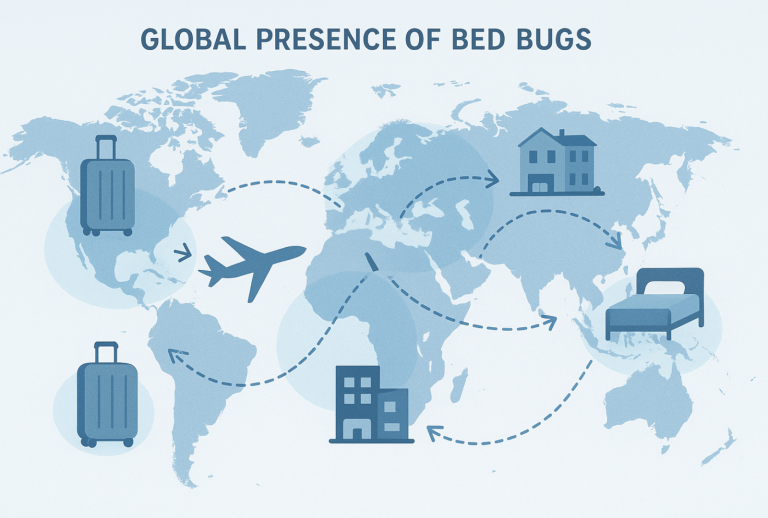
Bed bugs mainly affect private homes, often without the occupants realizing it for several weeks. Figures vary from region to region, but the global trend is clear: the phenomenon is long-lasting and affects every continent.
| Region | Household situation | Observed trends |
|---|---|---|
| 🇪🇺 Europe | France: ~10% of households have faced a bed bug infestation (ANSES, 2023).Spain: significant increase in major cities and tourist areas.Germany: steady rise over the past 10–15 years, mainly in dense urban areas.United Kingdom: estimated +25% annual increase since 2019 (BPCA). | Large cities are most affected, but rural areas are not spared. Infestations in private homes are often detected late. |
| 🇺🇸🇨🇦 United States & Canada | Around 1 in 6 to 8 households has experienced a confirmed or suspected infestation. | Reports are more frequent in apartment buildings, high-turnover housing and dense urban areas. |
| 🇦🇺 Australia | Strong increase since the early 2000s. Private households now account for most interventions. | The issue goes far beyond hotels and mainly affects private homes. |
| 🇧🇷🇦🇷🇨🇱 South America | Limited public data. Presence confirmed in large cities and tourist areas. | Significant underreporting due to uneven access to professional services and normalization of the problem. |
Bed bugs are now a common, widespread global problem.
They can affect anyone, in any type of housing, regardless of hygiene or lifestyle. The risk is neither rare, shameful, nor exceptional. The difference lies mainly in early detection, access to reliable information, adopting simple and calm measures, and targeted intervention when necessary.
| Region / Country | Estimated Share of Affected Households (10 years) | Source / Method |
|---|---|---|
| 🇺🇸 United States | 1 in 10 households | National Pest Management Association (NPMA) |
| 🇨🇦 Canada | 1 in 12 households | Municipal reports + pest control professionals |
| 🇫🇷 France | 1 in 20 households | ANSES Study – 2023 |
| 🇩🇪 Germany | Estimated 5–8 % of households | Professional pest control associations + regional reports |
| 🇪🇸 Spain | Increasing cases, mainly in urban areas | Regional health reports + pest control companies |
| 🇮🇹 Italy | Moderate but rising prevalence | National pest control associations |
| 🇬🇧 United Kingdom | +25 % increase per year since 2019 | British Pest Control Association |
| 🇦🇺 Australia | Fourfold increase over 15 years | Australian Environmental Health Survey |
| 🇧🇷🇦🇷🇨🇱 South America | No centralized data available | Local health reports (significant underreporting) |
The data clearly shows that:
An informed individual who:
Being informed greatly reduces the risk of a long-term infestation.
Bed bugs are now commonly associated with hotels and tourist accommodation. This perception often fuels travelers’ concerns. However, the figures must be interpreted with caution: there is no centralized global database recording all hotel infestations. Despite this, several national surveys, professional reports, and health studies provide reliable trends.
Before examining the statistics, it is important to understand their limitations:
The available statistics therefore mainly reflect reports, surveys, and professional feedback, rather than all actual situations.
In Europe, some health agencies have conducted large-scale surveys.
Key point: these figures do not indicate permanent infestation, but rather occasional exposure to the phenomenon.
In North America, data comes mainly from:
The results are consistent:
Professionals have seen a steady increase in hotel interventions over the past 15 to 20 years, mainly linked to international mobility.
Australia is one of the countries that reported an early resurgence:
This confirms that hotels are not the only source, but one of many points of entry.
In many parts of the world:
Scientists are now talking about a global resurgence affecting every continent.
| What the data shows | What the data does NOT allow us to conclude |
|---|---|
| ✔ Bed bugs are present in all types of accommodations (hotels, Airbnb, hostels, dormitories). | ❌ That a specific hotel is permanently at risk or systematically infested. |
| ✔ No hotel category (budget, mid-range, luxury) is completely spared. | ❌ That an infestation is linked to poor hygiene or lack of professionalism. |
| ✔ Most situations are isolated, detected early, and treated quickly. | ❌ That bed bugs are constantly present or always visible in rooms. |
| ✔ Infestations are often linked to high traveler turnover. | ❌ That the risk is exceptional or rare. |
There is a risk of encountering bed bugs when traveling, but it remains predictable and manageable.
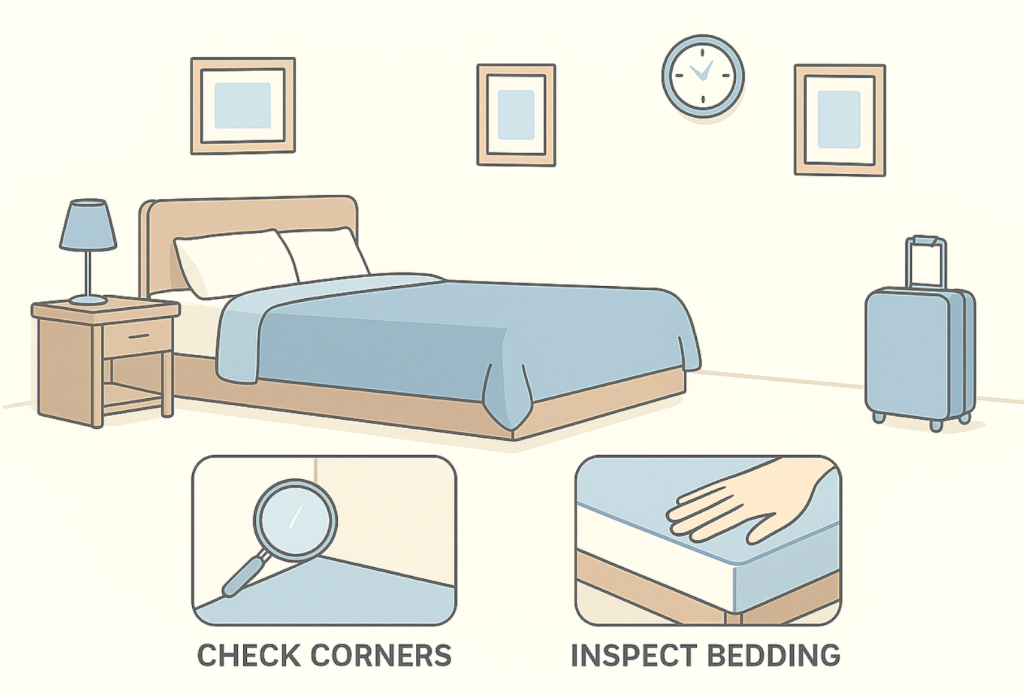
The right strategy is not to avoid certain hotels or destinations, but to remain calm and vigilant. A quick inspection of the room upon arrival and careful handling of luggage are sufficient in the vast majority of cases to greatly reduce the risk of bringing bed bugs home with you.
Global statistics show that bed bugs have become a worldwide phenomenon linked to human travel. Hotels are neither the only places affected nor permanent sources of infestation. The majority of cases are dealt with quickly and effectively.
The key is not fear, but knowledge: knowing how to recognize the signs, understanding the real risks, and taking simple precautions allows you to travel with peace of mind, anywhere in the world.
Yes. Available data confirm their presence on all continents, in both urban and rural areas, and in all types of housing.
No. There is no centralized global database. Statistics come from national surveys, local studies, and feedback from professionals.
Yes. Bedbug infestations mainly affect private homes, but they are less visible because they are often not reported or are dealt with discreetly.
Yes. Experts have observed a steady increase over the past 15 to 20 years, linked in particular to international travel and insecticide resistance.
The figures relating to bed bugs vary greatly from one country to another, mainly because there is no centralized global database that allows infestations to be recorded in a uniform manner, particularly in private homes. Unlike certain diseases or regulated health indicators, bed bug infestations are not generally subject to any official reporting requirements.
The available data is therefore based on a wide variety of sources: public health surveys, household surveys, reports from pest control companies, or ad hoc studies conducted in certain cities or regions. Each country uses its own methods, with varying degrees of accuracy, making direct comparisons difficult.
Added to this is an important human factor: underreporting. Many people are reluctant to report an infestation for fear of stigmatization, lack of information, or because they first try “home remedies” that are never documented. In some countries, limited access to specialized professionals or the cost of interventions further reduces the actual visibility of the phenomenon.
Finally, differences in urban density, international mobility, housing structures (apartment buildings vs. single-family homes), and public awareness strongly influence the published figures. Countries that communicate more on the subject often give the impression of being more affected, when in fact they are sometimes simply better documented.
Statistical variations do not reflect an absence or exceptional presence of bed bugs, but rather differences in measurement, transparency, and reporting. What the data does confirm, however, is that the phenomenon is global, persistent, and widespread, affecting all types of housing and populations.
© All Rights Reserved. © Tous droits réservés. © Todos los derechos reservados. © Alle Rechte vorbehalten.